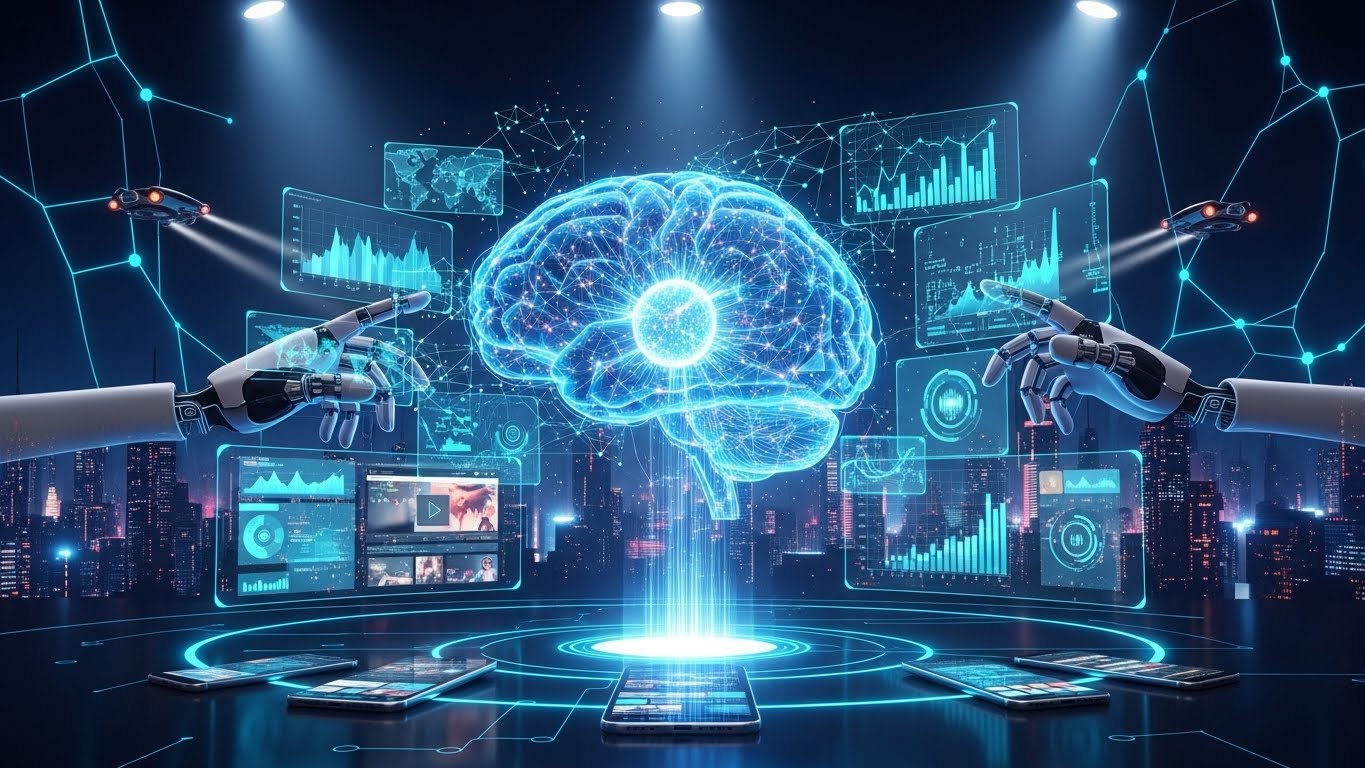
For a long time, I believed creativity had to start from a blank page.
A sketchbook. A timeline. A blinking cursor.
But the more projects I handled—and the tighter the deadlines became—the more I realized something important:
Creativity doesn’t slow down because ideas are hard. It slows down because exploration takes too long.
That’s where AI completely changed my concept design workflow.
AI Didn’t Replace My Creativity — It Removed the Friction
When people hear “AI in design,” they often think automation or shortcuts. That wasn’t my goal.
My goal was speed without losing intention.
I started integrating AI at the earliest stage of concept design—before moodboards, before storyboards, before timelines. Instead of staring at a blank canvas, I began conversations:
- What could this idea look like?
- What if we explored five directions instead of one?
- What metaphors fit this message best?
AI became my creative sparring partner, not my replacement.
My AI-Driven Concept Design Workflow
Here’s how I practically use AI to accelerate ideation while staying in control of the creative direction.
1. Clarifying the Core Idea Faster
Every project starts with clarity, not visuals.
I use AI to pressure-test the brief by asking:
- What is the emotional goal of this project?
- Who is this really for?
- What single idea should be remembered?
This step helps me strip away noise and lock onto a strong conceptual core before any visuals are explored.
2. Rapid Visual Exploration (Without Commitment)
Traditionally, exploring multiple concepts takes days.
With AI image generation, I can explore:
- Multiple visual styles
- Different moods and atmospheres
- Unexpected metaphors
—all within hours.
These visuals are not final assets. They’re thinking tools.
They help me answer questions like:
- Does this feel premium or playful?
- Is this too literal or too abstract?
- What direction emotionally resonates the most?
Instead of guessing, I can see possibilities early.
3. Building Stronger Moodboards
AI allows me to build moodboards that are more intentional, not generic.
Rather than pulling random references, I generate visuals that align exactly with:
- The story
- The emotional tone
- The cultural context
This makes client conversations clearer. Everyone reacts to the same vision, not vague interpretations.
4. Exploring Motion Before Animation
One of the biggest breakthroughs for me was using AI to think about motion conceptually before opening After Effects.
I explore questions like:
- Should this motion feel organic or mechanical?
- Calm or energetic?
- Controlled or expressive?
Even static AI-generated frames can suggest pacing, rhythm, and movement direction—saving hours of trial and error later.
5. Concept Validation Before Production
AI helps me stress-test ideas early.
If a concept doesn’t feel strong at the ideation stage, no amount of animation polish will save it.
By exploring multiple directions quickly, I can confidently eliminate weak ideas and double down on the strongest concept before production begins.
This reduces revisions, protects timelines, and improves creative confidence.
Where the Human Still Leads
AI accelerates exploration—but taste, judgment, and storytelling are still human-led.
I decide:
- What feels authentic
- What aligns with the brand
- What emotion matters most
AI gives me options.
I give them meaning.
Why This Matters in Today’s Creative Landscape
Clients move faster. Platforms change constantly. Attention is scarce.
Concept design can no longer afford to be slow.
By integrating AI into early ideation, I can:
- Explore more ideas
- Take smarter creative risks
- Focus my energy on storytelling, not searching
The result isn’t less creativity.
It’s more intentional creativity, delivered faster.
Final Thought
AI hasn’t made my work less human.
It’s made it more focused.
By removing friction at the concept stage, I spend more time doing what matters most—shaping ideas that connect emotionally and visually.
Used intentionally, AI doesn’t replace creative thinking.
It amplifies it.
— A motion designer using AI to think faster, not think less.